
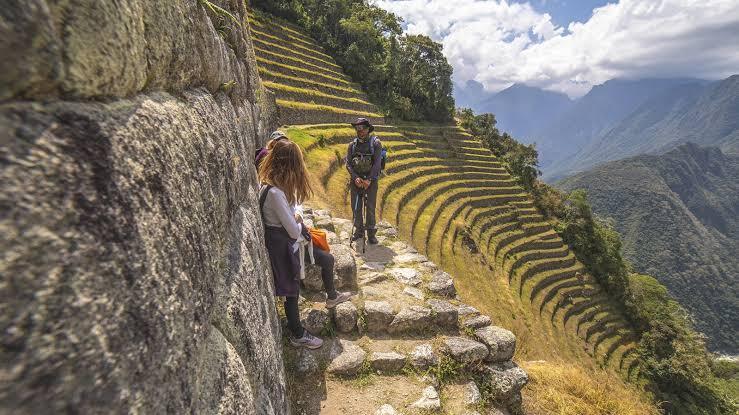
Cusco sits at the doorstep of some of the most varied trekking terrain in South America, from turquoise glacial lakes to multicolored mountains and ancient stone trails. Choosing among them depends less on fitness and more on what kind of day you want.
Some routes fit into a single morning, others demand four or five days on the trail. Here’s how the region’s top hikes compare.
Inca Trail to Machu Picchu
No hike in Cusco carries more prestige than this one. Four days of stone paths, cloud forest and Inca ruins end with a sunrise arrival at Machu Picchu through the Sun Gate, a view earned entirely on foot.
Permits are limited and sell out months ahead for peak season, so this is the hike to book first if it’s on your list.
Salkantay trek
Salkantay offers the mountain drama the Inca Trail doesn’t, passing directly beneath a 20,500-foot snow-capped peak over five days. No permits are needed, and the trek includes cloud forest, coffee farms and hot springs most trekkers don’t expect from an Andean route.
It’s the go-to choice for travelers who want a serious multi-day trek without competing for scarce permits.
Rainbow Mountain (Vinicunca)
This is the shortest serious hike near Cusco, just 4 miles round trip, but altitude above 17,000 feet makes it feel far tougher than the distance suggests. Most tours depart before dawn to beat both the crowds and the afternoon clouds that often roll in.
Acclimatizing in Cusco for at least two days beforehand makes a real difference here.
Humantay Lake
A single day is all this hike requires, yet it delivers one of the most striking views in the entire region: a turquoise glacial lake framed by snow peaks. The round trip runs roughly 5 miles with a steep but short climb, making it accessible to hikers without multi-day trekking experience.
Many travelers pair Humantay Lake with the first day of the Salkantay trek, since the trailheads overlap.
Choquequirao
For hikers chasing solitude, Choquequirao delivers ruins nearly as impressive as Machu Picchu with a fraction of the visitors. The tradeoff is a demanding four to five day trek across the Apurímac Canyon, with two brutal elevation swings that test sustained climbing strength more than any other hike on this list.
Building your Cusco trekking itinerary
Altitude acclimatization should shape your entire trip plan, not just the hardest hike on it. Spending two to three days in Cusco at 11,000 feet before attempting Rainbow Mountain or any multi-day trek reduces altitude sickness risk considerably.
At Yeska Tours, we build acclimatization days directly into every itinerary and help travelers combine hikes logically, whether that means pairing Humantay Lake with a Salkantay departure or spacing out Rainbow Mountain around a longer trek. Our guides know these trails well enough to read a group’s pace and adjust on the fly.
Cusco rewards trekkers who plan around altitude first and distance second. Get that right, and every hike on this list becomes a highlight rather than an ordeal.
How much time to budget for hiking around Cusco
A single week gives most travelers enough room to combine one multi-day trek with a couple of shorter hikes, though the exact mix depends heavily on which routes make the list. Someone prioritizing the Inca Trail needs to build their entire schedule around securing permits first, since availability constrains dates more than any other factor.
Travelers with only three or four days often do best focusing on a single standout experience, whether that’s Rainbow Mountain paired with a relaxed day in the Sacred Valley, or Humantay Lake combined with extra acclimatization time in Cusco itself. Trying to cram too many demanding hikes into a short window usually backfires, since altitude fatigue compounds faster than most visitors expect.
Guided versus independent hiking
Some of these routes, particularly Humantay Lake and Rainbow Mountain, can technically be hiked independently using public transport to the trailheads. Multi-day treks like the Inca Trail legally require a licensed guide and registered operator, both for permit compliance and for genuine safety on remote sections of trail.
Even on the hikes that allow independent access, a knowledgeable local guide adds real value beyond logistics, offering context on the history and culture behind sites that a solo hiker would otherwise walk past without understanding. That difference tends to matter more to travelers than they initially expect once they’re actually on the trail.


